
PostgreSQL Administration
Lesgeld
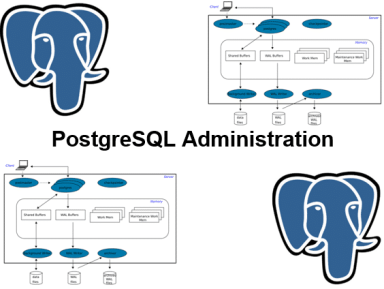
Cursus PostgreSQL Administration
De cursus PostgreSQL Administration biedt een uitgebreide introductie tot het beheer van PostgreSQL-databases. We starten met de installatie-opties en de tools pgAdmin en psql. Ook worden de voornaamste kenmerken van PostgreSQL behandeld, zoals table inheritance, sophisticated locking, nested transactions en asynchrone replicatie. Deze basiskennis is essentieel voor het effectief beheren van PostgreSQL.
PostgreSQL Architectuur
Vervolge
Cursus PostgreSQL Administration
De cursus PostgreSQL Administration biedt een uitgebreide introductie tot het beheer van PostgreSQL-databases. We starten met de installatie-opties en de tools pgAdmin en psql. Ook worden de voornaamste kenmerken van PostgreSQL behandeld, zoals table inheritance, sophisticated locking, nested transactions en asynchrone replicatie. Deze basiskennis is essentieel voor het effectief beheren van PostgreSQL.
PostgreSQL Architectuur
Vervolgens duiken we in de PostgreSQL architectuur en de processen die daarbij een rol spelen, zoals het Postmaster Daemon Process, Background en Backend processen, en Client processen. Ook tablespaces en vacuum komen aan bod, wat cruciaal is voor het optimaliseren van databaseprestaties.
Server en Database Objecten
Ook besteden we aandacht aan de meest gebruikte server- en database-objecten die PostgreSQL biedt. Het is van belang om objecten zoals Server Service en Database Object te leren kennen. Dit stelt je in staat om optimaal gebruik te maken van hun functionaliteit binnen je databasebeheer.
Backup en Herstel
Een belangrijk onderdeel van de cursus PostgreSQL Administration is het leren gebruiken van de backup-tools pg_dump en pg_dumpall. We behandelen Point-in-Time Database Restoration en het instellen van WAL archiving, zodat je altijd voorbereid bent op dataverlies.
Indexen
Het gebruik van indexen in PostgreSQL, inclusief de verschillen tussen B-Tree, Hash, GiST, GIN en BRIN indexen, is eveneens een belangrijk onderwerp binnen deze cursus. Goed begrip van indexen is essentieel voor het verbeteren van databaseprestaties en query-efficiëntie.
Rollen en Beveiliging
Het beveiligen van een PostgreSQL-server is van groot belang. In dit gedeelte van de cursus gaan we in op access permissions en client authentication control, evenals Data Encryption en de pg_crypto-module. Dit zorgt ervoor dat je gegevens veilig zijn en voldoen aan de vereisten voor databeveiliging.
Clustering
Tenslotte besteden we aandacht aan High Availability en Load Balancing door meerdere PostgreSQL-servers in een cluster te plaatsen. Dit is cruciaal voor organisaties die een betrouwbare en schaalbare database-infrastructuur nodig hebben.
Voor meer informatie over databases en data-analyse kun je ook onze cursus NoSQL Data Access bekijken. Wil je meer leren over de beveiliging van databases? Neem dan een kijkje bij onze cursus SQL Server Administration. Voor uitgebreide documentatie over PostgreSQL kun je terecht op de officiële PostgreSQL-documentatie.
Doelgroep Cursus PostgreSQL Administration
De cursus PostgreSQL Administration is bedoeld voor personen die PostgreSQL databases en PostgreSQL servers moeten beheren, controleren en ondersteunen.
Voorkennis PostgreSQL Administration
Voor deelname aan de cursus PostgreSQL Administration is kennis van de SQL query taal en databases een vereiste.
Uitvoering Training PostgreSQL Administration
De stof wordt behandeld aan de hand van presentaties. Demo's verduidelijken de theorie en praktische oefeningen zorgen voor een verwerking van de stof. De cursustijden zijn van 9.30 tot 16.30.
Certificering PostgreSQL Administration
De deelnemers krijgen na het goed doorlopen van de cursus een officieel certificaat PostgreSQL Administration.
Modules
Module 1 : PostgreSQL Intro
- What is PostgreSQL?
- PostgreSQL Features
- User-defined types
- Table inheritance
- Sophisticated locking mechanism
- Foreign key referential integrity
- Nested Transactions and Savepoints
- Multi-version Concurrency Control
- Asynchronous replication
- Install and Connect to PostgreSQL
- pgAdmin Application and psql Shell
Module 2 : PostgreSQL Architecture
- Shared Memory
- Shared and WAL Buffer
- PostgreSQL Process Types
- Postmaster Daemon Process
- Background Processes
- Backend Processes
- Client Processes
- Database Structure
- Create User Database
- What are Tablespaces?
- What is Vacuum?
Module 3 : Server and Database Objects
- Server Service
- Database Object
- Table Object and Schema
- PostgreSQL Tablespaces
- pg_default and pg_global
- View as Virtual Tables
- Functions and Operators
- Server Configuration
- Logging Parameters
- Memory Parameters
- WAL Parameters
Module 4 : Backup and Restore
- PostgreSQL Backup Tools
- pg_dump and pg_dumpall
- Point-in-Time Database Restoration
- Setting up WAL archiving
- Data and/or Structure
- pg_dump Parameters
- Backup Object Definitions
- pg_restore and psql
- Ignore and Stop on Errors
- pg_store Parameters
- Restore only Structure
Module 5 : Indexes
- What are Indexes?
- Index Types
- B-Tree, Hash, GiSY
- GIN and BRIN
- Index Differences
- Create and Drop Index
- List indexes
- Unique Index
- Index on Expression
- Partial index and Reindex
- Multicolumn Indexes
Module 6 : Database Management
- Options to Create Databases
- Modify Databases
- Rename Databases
- Change Owner and Tablespace
- Change Session Defaults
- Delete Databases
- Check Activity with pg_stat_activity
- Copy a Database
- Using pg_dump
- Get Database Object Sizes
- Using pg_size_pretty
Module 7 : Role Management
- Access Permissions
- pg_hba.conf file
- Creating PostgreSQL Roles
- Privileges and Restrictions
- superuser
- Login Privilege
- pg_roles System Catalog
- Role Attributes
- Groups
- Role Membership
- User Role and Group Inheritance
Module 8 : Securing PostgreSQL
- Client Authentication Control
- Rule Specification
- Server Configuration
- Changing Parameters
- Role Strategies
- Super User Management
- Data Encryption
- One and Two Way Encryption
- pg_crypto
- Logging
- pg_stat_statements Module
Module 9 : Cluster Management
- High Availability Cluster
- Performing Replication
- Primary Server
- Promoting Standby Server
- Load Balancing
- HAProxy Configuration
- Xinetd Setup
- HAProxy in ClusterControl
- Reslaving Standby Server
- Chained Replication
- Keepalived
